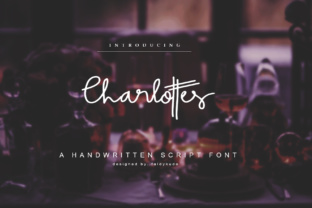
Charlottes: A Versatile Handwritten Script Font for Personalized Design
Charlottes is a handwritten script font that offers a distinctive, personal touch to a wide range of design projects. Its unique style, characterized by extra large capitals and fluid, expressive lettering, makes it ideal for applications where a custom feel is desired. From wedding invitations to logos, apparel, and decorative quotes, Charlottes provides a flexible solution for those looking to add a humanized aesthetic to their work.
Unlike more rigid or formal typefaces, Charlottes brings a sense of warmth and individuality to any design. This quality can be particularly valuable in contexts where authenticity and emotional resonance are important, such as in branding for small businesses or personal projects like scrapbooking and handmade crafts.
What Makes Charlottes Distinct?
One of the most notable features of Charlottes is its emphasis on large, stylized capitals. These letters stand out and create a signature look that can serve as a focal point in a design. The font’s handwritten appearance gives it a natural, almost organic feel, which sets it apart from more mechanical or structured typefaces.
The balance between legibility and artistic expression is another key aspect of Charlottes. While it maintains readability, especially in larger sizes, it also allows for creative freedom in how it’s used. This makes it suitable for both functional and decorative purposes, depending on the context and intent of the designer.
Additionally, Charlottes is designed with versatility in mind. It can be used in a variety of formats, from digital graphics to printed materials, making it a practical choice for designers who need a font that adapts well across different mediums.
Comparing Charlottes to Other Script Fonts
When considering script fonts, there are many options available, each with its own strengths and limitations. Some fonts prioritize elegance and formality, while others focus on casual, informal styles. Charlottes falls into a middle ground, offering a balance between structure and creativity.
For example, a font like Brush Script might be more suited for casual, hand-drawn designs, whereas a font like Lobster could provide a bolder, more dramatic effect. In contrast, Charlottes offers a more refined yet approachable style that works well in both professional and personal settings.
Another consideration is the level of customization possible with each font. While some script fonts may have limited character sets or require additional licensing for commercial use, Charlottes is typically designed with broad usability in mind. This makes it a practical option for users who want to avoid complications with licensing or font availability.
Best Fit Situations for Charlottes
Charlottes excels in scenarios where a personal, handwritten touch is desired. Wedding invitations, for instance, often benefit from a font that conveys warmth and individuality. The extra large capitals in Charlottes can help draw attention to key elements like names or dates, adding visual interest without overwhelming the overall design.
In branding, Charlottes can be an effective choice for small businesses or startups that want to communicate a friendly, approachable image. It works well for logos, business cards, and packaging, especially when paired with simpler, more neutral typefaces to maintain balance.
Apparel and merchandise design also benefit from the font’s expressive nature. Whether it’s a T-shirt with a motivational quote or a custom mug with a name, Charlottes adds a unique flair that stands out from mass-produced alternatives.
Limitations and Tradeoffs
While Charlottes has many advantages, it’s not always the best fit for every project. In cases where clarity and precision are critical, such as in technical documents or signage, a more straightforward font may be preferable. The handwritten style, while appealing in many contexts, can sometimes reduce readability, especially at smaller sizes or in dense text blocks.
Additionally, the font’s stylistic choices may not align with all design aesthetics. For example, a minimalist or modern design might find Charlottes too ornate or inconsistent with the overall theme. In such cases, alternative fonts with cleaner lines or more restrained details could be a better match.
Users should also consider the availability of the font and its compatibility with different software. While most design programs support common font formats, some specialized tools or platforms may have limitations that affect how Charlottes can be used.
When to Choose Another Option
There are situations where a different font might be more appropriate. For instance, if a project requires a high degree of uniformity or a more traditional appearance, a serif or sans-serif font could be a better choice. Similarly, if the goal is to create a bold, eye-catching headline, a more dramatic script font might be more effective than Charlottes.
For users working on multi-platform projects, such as web design or mobile apps, it’s important to ensure that the font displays consistently across devices. In these cases, a more universally supported font may be necessary to avoid issues with rendering or performance.
Ultimately, the decision to use Charlottes should depend on the specific needs of the project and the intended audience. Testing the font in different contexts and comparing it with alternatives can help determine whether it’s the right choice.
Practical Applications and Realistic Examples
Consider a scenario where a couple is designing their wedding invitations. They want something that feels personal and meaningful but still maintains a level of sophistication. Charlottes could be used for the couple’s names, providing a stylish and memorable touch without being overly complex.
Another example is a local coffee shop looking to create a logo that reflects its community-focused values. Using Charlottes for the shop’s name could convey a sense of warmth and authenticity, helping to build a connection with customers.
In the realm of print media, a designer creating a poster for an art exhibit might use Charlottes for the title, giving the design a creative and dynamic feel that complements the artwork itself.
These examples illustrate how Charlottes can be adapted to different uses while maintaining its core appeal. However, they also highlight the importance of thoughtful application and consideration of the font’s characteristics.